Artificial Intelligence
Sep 7, 2026
The Observance of Labor Day and the Looming Fear of AI in the Workplace
Read More


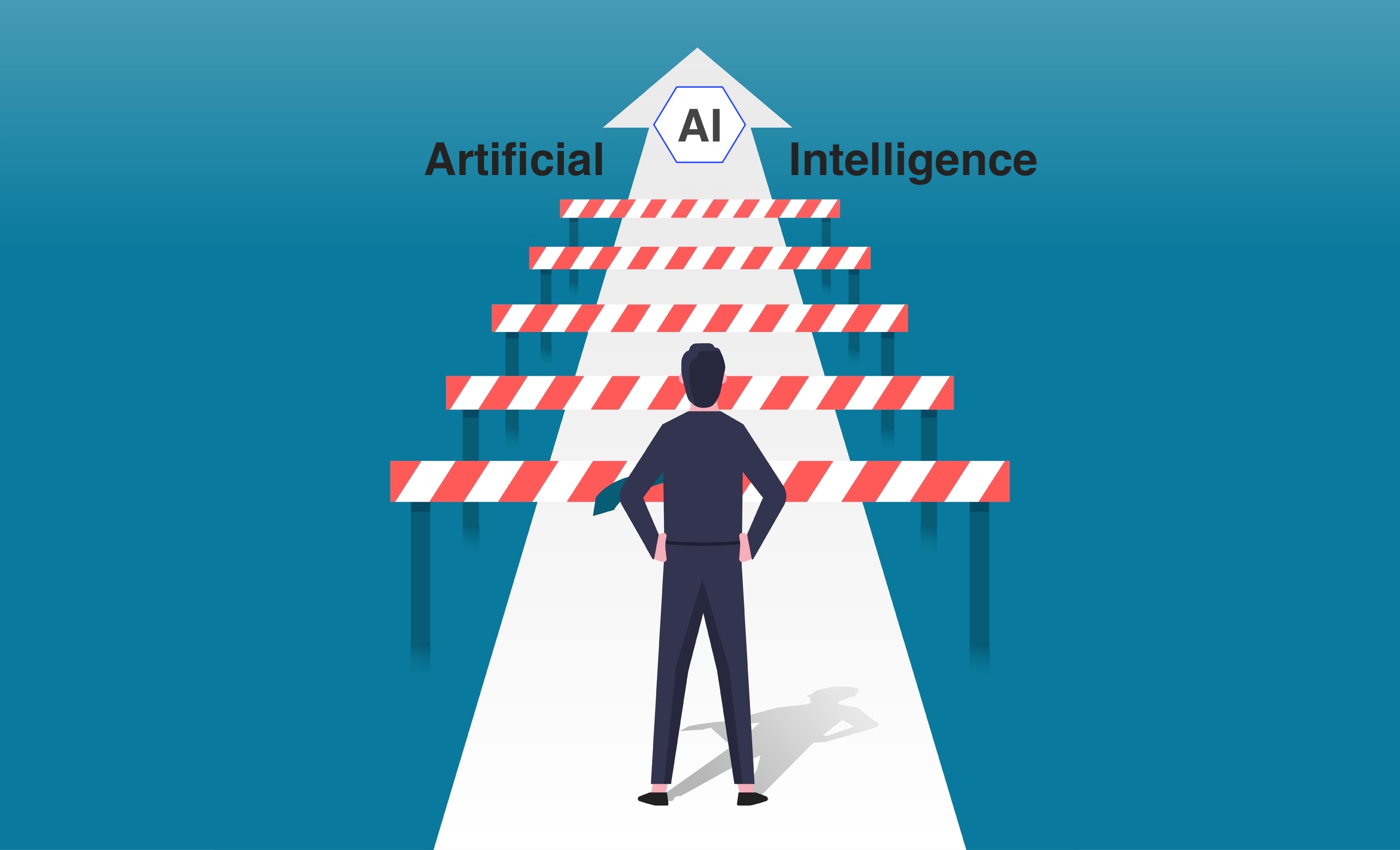
Implementing artificial intelligence often looks like a massive technical mountain to climb. Executives spend months evaluating vendors, analyzing data security and planning intricate system integrations. Yet, the true barrier to enterprise technology adoption has almost nothing to do with algorithms, neural networks or processing power. It is fundamentally an organizational behavior and culture problem.
When you strip away the complex code, artificial intelligence is simply a tool that changes how humans work. If your workforce actively resists that change, even the most sophisticated software becomes a costly paperweight. We will explore exactly why human resistance stalls technological progress across global enterprises.
You will understand the psychological drivers behind employee pushback and why traditional corporate structures fail to support rapid innovation. More importantly, this article outlines how leaders can build a resilient culture that enthusiastically embraces change. You will walk away with actionable strategies to transform workplace fear into genuine, productive engagement.
Leadership teams frequently diagnose failed artificial intelligence projects as technical shortcomings. They assume the software lacked specific features, the data integration was flawed or the user interface was too clunky. While these issues certainly occur, they rarely cause total project abandonment. The real culprit usually hides in plain sight within the daily habits of the workforce.
Companies routinely allocate millions of dollars to secure top-tier software licenses. They hire external consultants to ensure flawless technical deployment. However, they allocate almost zero resources to guide their people through the massive shift in daily operations. This massive imbalance guarantees friction.
When you drop a complex new system onto a team without adequate psychological preparation, you set them up for failure. Employees view the sudden technological shift as an uninvited disruption rather than a helpful upgrade. They retreat to their old, familiar processes the moment the training sessions end. This behavior severely limits return on investment and leaves executives scratching their heads.
Workforce resistance rarely looks like an organized strike or vocal opposition. It usually manifests as passive non-compliance. Employees might nod enthusiastically during the town hall announcement, but they quietly find workarounds to avoid using the new platform. They cite a lack of time to learn the system or claim the old method produces better quality results.
This silent resistance acts as a massive anchor on organizational productivity. You end up paying for expensive software while your team continues using outdated, inefficient methods. Over time, the initiative quietly dies due to a lack of utilization. To solve this, you must look beyond the screen and address the humans operating the keyboard.
To fix the adoption crisis, you must understand why people resist change in the first place. Resistance is a deeply human response to uncertainty. Artificial intelligence carries a unique psychological weight because popular culture has painted it as a direct threat to human usefulness. When you announce an automation initiative, your employees do not hear "increased efficiency." They hear a threat to their livelihood.
Employees naturally fear that aggressive automation will make their specific roles obsolete. If a machine can write a report, analyze a spreadsheet, or answer a customer query in three seconds, what value does the human bring? This fear strikes at the core of their professional identity and financial security.
When people feel threatened, their natural instinct is to protect their territory. They might intentionally withhold data, refuse to participate in training, or highlight every minor error the new system makes. This is not malicious behavior; it is a defensive survival mechanism. You cannot bulldoze through this fear with strict mandates. You must address it directly with empathy and clear communication.
Modern workers suffer from severe initiative fatigue. Over the past decade, they have endured countless digital transformations, software migrations and workflow overhauls. Every year brings a new mandate to learn a slightly different way of doing the exact same job.
When you introduce artificial intelligence as just another mandatory software update, you trigger profound exhaustion. Employees simply do not have the mental bandwidth to navigate another steep learning curve without a compelling reason. If the tool does not immediately and obviously make their daily life easier, they will reject it out of pure fatigue.
The psychological barriers mentioned above are often amplified by the way the organization itself is structured. Traditional corporate hierarchies were designed for stability and predictable output. They were built to mass-produce consistent results, not to foster rapid experimentation. This rigid architecture directly opposes the mindset required for successful technological adoption.
Many established companies operate with a zero-defect mentality. They actively punish failure, tying career advancement entirely to flawless execution. Artificial intelligence, however, requires a distinct period of messy experimentation to integrate properly into daily workflows.
If your culture demands immediate perfection, your team will actively avoid using unfamiliar technologies. No sensible employee will risk their year-end bonus to test a new automated workflow that might produce an error. They will stick to the safe, manual process they know they can execute perfectly. You cannot mandate innovation in an environment where mistakes are fatal to a career.
Successful automation rarely sits within a single department. A tool designed to streamline customer service will inevitably impact sales data and marketing strategies. Unfortunately, traditional organizations operate in deeply entrenched silos. Departments rarely practice the principles of Business Agility, sharing information freely. Instead, they actively guard [gatekeep] their specific processes.
When a new technology requires cross-functional collaboration, these silos cause massive friction. The IT department might deploy a system that makes perfect technical sense but completely ruins the daily workflow of the finance team. Without an open, collaborative culture, the technology fails to gain traction across the broader enterprise.
You cannot buy an innovative culture from a software vendor. You must intentionally build it from the ground up. This requires a fundamental shift in how your leadership team communicates, measures success and supports daily operations. You must transition from a culture of strict compliance to a culture of empowered curiosity.
The first crucial step is changing the narrative. You must reposition artificial intelligence as a collaborative tool rather than a human replacement. Stop talking about how many hours the software will cut from the budget. Start talking about the specific frustrations the software will remove from your employees' daily lives.
Show your team exactly how these advanced systems eliminate tedious administrative tasks. Prove that the technology acts as an intelligent assistant, taking over the mundane data entry so they can focus on higher-level, highly creative work. When employees view the technology as a personal lever for their own success, their fear transforms into eager anticipation.
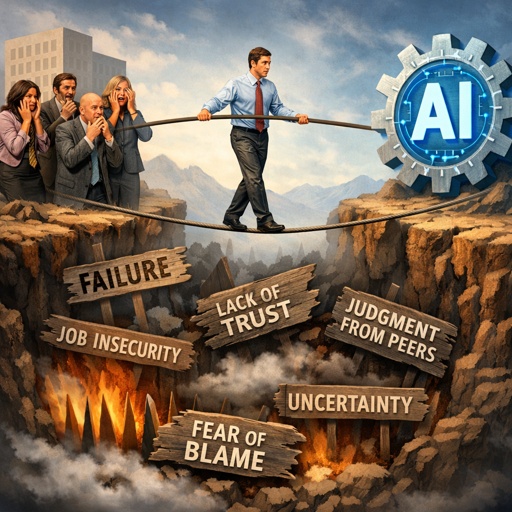
To overcome the zero-defect mentality, you must cultivate profound psychological safety. Employees need to know they can test new tools, make a mess, and learn from the outcome without facing disciplinary action. You must publicly separate the learning phase from the execution phase.
Create structured sandbox environments where employees can freely experiment without fear of penalty. Encourage them to try breaking the system to see its limitations. When someone discovers a workflow that fails, celebrate the discovery as a valuable learning moment. By actively rewarding curiosity over immediate operational competence, you build a workforce that naturally gravitas toward continuous improvement.
Cultural transformation requires more than inspiring speeches. You need structural strategies to guide the organization through the transition. Effective change management turns abstract cultural goals into daily, observable habits.
People trust their peers far more than they trust executive mandates. Identify highly respected employees at the ground level who naturally embrace new technology. Empower these individuals to become internal champions for your new initiatives.
Give them early access to the tools and allow them to design their own workflows. When the rest of the team sees a respected peer successfully using the technology to leave work early on a Friday, adoption rates will skyrocket. These champions provide localized, empathetic support that a centralized IT helpdesk simply cannot match.
If you want your team to adopt new behaviors, you must change how you measure their performance. You cannot evaluate an employee based on outdated metrics if you want them to use futuristic tools.
During the initial adoption phase, temporarily suspend efficiency metrics. Instead, measure and reward utilization and exploration. Offer bonuses or public recognition to teams that successfully integrate the new tool into a client presentation, regardless of whether it saved time on the first try. Aligning your compensation and recognition structures with your adoption goals guarantees behavioral change.
The technology landscape will only continue to accelerate. Organizations that fixate entirely on software while ignoring their human capital will constantly struggle to adapt. Artificial intelligence is incredibly powerful, but its true potential is only unlocked when placed in the hands of an empowered, fearless workforce.
By addressing the deep-seated fears of your team, dismantling rigid corporate silos and rewarding genuine curiosity, you build an impenetrable competitive advantage. You transition from a company that merely purchases technology to an organization that natively breathes innovation.
Audit your upcoming digital initiatives and evaluate your current change management plans. Ensure you are spending as much time preparing your people as you are preparing your servers. Empower your workforce, provide them with extreme psychological safety, and watch them naturally elevate your entire operation.